


Wiring 6-50 Welding Outlet
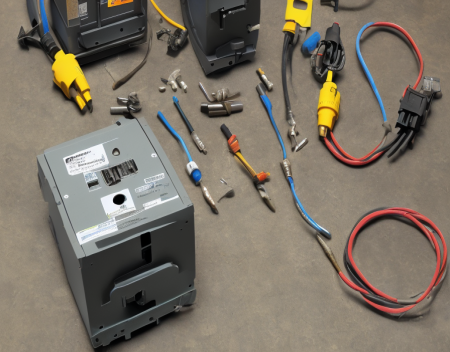
A couple clarifying questions on my welder outlet install.
One issue is that since I don't have any real NEC knowledge - it seems that every aspect of the install has some fractal detail of what NEC requires.
I already did the install and it works great. But want to make sure safe and code.
6/2 wire - Home Depot person sold me 6/2. I intended to get 6/3 but "that was all I need". It's only a 3 foot run so no harm if I need to redo. See my 14-50 question below.
Ground - If using a 6-50 outlet - there is no neutral wire so only ground wire, correct? I understand the box has to be grounded - but to what? Would it be code if I connect a solid wire to the ground connection and twist it on the Romex ground and screw that to the outlet?
Stapling - since it's a very short run - is there any problem in not mounting or securing the Romex inside the wall?
14-50 - since this is the common vehicle charging outlet - is it short sighted to not just mount a 14-50 outlet and use an adapter for 6-50 for welding? Would have more uses in future - or is it better to use as dedicated outlet?
GFCI - I understand GFCI is needed for outlets now (something none of the youtube yahoos mention that I've seen). I picked up a 50a breaker - it's huge. Will be a bit challenging to install in the box. What are the consequences of not installing? I understand shock hazard. Fire hazard? I plan to do so but it seems overkill.
Ground = Neutral. In my Square D box - there are not separate ground/neutral wires. So does it make any difference when grounding or if I wanted to use 14-50 whether there is a separate neutral wire (requiring 6/3).
NEC reference - does an online reference to NEC exist? I saw one which you'd have to pay like $300? Is this oracle of information limited to 33rd degree Masons and chosen ones?
Thank you!.
Question from user Matt at .stackexchange.com.
Answer:
Key to a lot of your questions/concerns is that welding does not need neutral, therefore 6-50 is correct rather than 14-50. Similarly, electric vehicle charging does not need neutral (discussed more below).
1 - 6/2 wire - Home Depot person sold me 6/2. I intended to get 6/3 but "that was all I need". It's only a 3 foot run so no harm if I need to redo. See my 14-50 question below.
Correct. /2 means 2 current-carrying wires plus ground. That is all you need for a 6-50 or any other 240V circuit that doesn't need neutral (i.e., doesn't have any parts that need 120V).
2 - Ground - If using a 6-50 outlet - there is no neutral wire so only ground wire, correct? I understand the box has to be grounded - but to what? Would it be code if I connect a solid wire to the ground connection and twist it on the Romex ground and screw that to the outlet?
If it is a metal box then the Romex ground should go to the box. If the receptacle is self-grounding (common on good quality 120V 15A and 20A receptacles but I don't know if that is the case for 240V 50A receptacles or not) then you're done. If not, you connect a ground wire (green or bare) from the receptacle to the box.
If it is a plastic box (not recommended) then the box doesn't get grounded because that wouldn't do anything.
3 - Stapling - since it's a very short run - is there any problem in not mounting or securing the Romex inside the wall?
If the wall was finished before you installed the cable (i.e., you fished the wire through a finished wall from the panel to the receptacle) then you don't have to do anything.
If the wall was open then you should staple it. The requirement is (according to this article] every 4.5 feet, so for a run less than 5 feet you just need to secure it within 1 foot of each end - i.e., near the receptacle and near the panel.
If the wall was open and you are not covering it up with drywall (or similar) then the cable run needs to be protected from physical damage, which can be done with conduit (certain types), plywood, 2x4, metal - pretty much anything.
4 - 14-50 - since this is the common vehicle charging outlet - is it short sighted to not just mount a 14-50 outlet and use an adapter for 6-50 for welding? Would have more uses in future - or is it better to use as dedicated outlet?
No! As noted above, electric vehicle charging doesn't need a neutral either. The only reason 14-50 is a sort-of standard for EV charging is because 14-50 is itself a common thing - particularly at campgrounds for RVs. Because it is common, many EVs come with adapters to use it. But cables are available for plenty of other receptacle types, including 6-50, from many manufacturers including Tesla.
Hardwiring is far better for EV charging for a bunch of reasons. But for occasional (e.g., guest) use, a 6-50 is just as good as a 14-50.
5 - GFCI - I understand GFCI is needed for outlets now (something none of the youtube yahoos mention that I've seen). I picked up a 50a breaker - it's huge. Will be a bit challenging to install in the box. What are the consequences of not installing? I understand shock hazard. Fire hazard? I plan to do so but it seems overkill.
First of all, GFCI requirement for 240V 50A circuits is a relatively new thing. Check your local code - depending on which version of the NEC and possibly local amendments you may not actually be required to install GFCI protection for this circuit. If you do have to install GFCI protection, that does mean a big breaker.
That breaker must be an exact match for your panel - there are certain situations/panel and breaker combinations where a different brand will fit or nearly fit - but you can't use it unless it is the correct one. In most cases that means same manufacturer/product line - Square D QO, Square D Homeline, GE, Eaton BR, Eaton CH, Siemens. (There are some other smaller and/or older types - if you are not sure what to get, post a picture of your panel.).
If it is the correct breaker, it should fit your panel without any problems. But that is not always the case, as my electrician told me in one of his horror stories - and in that particular instance the whole problem would have been avoided if the customer hardwired his EV, but that won't help in your case. (Hardwired EV circuits don't need GFCI breakers.) If you do find that the GFCI breaker really won't fit properly then contact the manufacturer as there may be an updated version of the breaker or a variant for your particular panel as some panel types have existed for decades but have changed in a number of small ways over the years.
6 - Ground = Neutral. In my Square D box - there are not separate ground/neutral wires. So does it make any difference when grounding or if I wanted to use 14-50 whether there is a separate neutral wire (requiring 6/3).
If it is the main panel then ground/neutral together is normal and you can put ground on ground or neutral bar. If it is a subpanel then they should be separate - ground only to ground bar. A 14-50 requires /3 cable - separate neutral and ground wires - doesn't matter whether the box combines them (main panel) or not (subpanel).
7 - NEC reference - does an online reference to NEC exist? I saw one which you'd have to pay like $300? Is this oracle of information limited to 33rd degree Masons and chosen ones?
I usually Google the particular thing I am looking for and generally am able to find a reference to the section of the NEC without much trouble. The full NEC is available in some places but easiest is indeed behind a paywall (which most non-electricians can't easily access).
Answer from user manassehkatz-Moving 2 Codidact at .stackexchange.com.
A couple clarifying questions on my welder outlet install.
One issue is that since I don't have any real NEC knowledge - it seems that every aspect of the install has some fractal detail of what NEC requires.
I already did the install and it works great. But want to make sure safe and code.
6/2 wire - Home Depot person sold me 6/2. I intended to get 6/3 but "that was all I need". It's only a 3 foot run so no harm if I need to redo. See my 14-50 question below.
Ground - If using a 6-50 outlet - there is no neutral wire so only ground wire, correct? I understand the box has to be grounded - but to what? Would it be code if I connect a solid wire to the ground connection and twist it on the Romex ground and screw that to the outlet?
Stapling - since it's a very short run - is there any problem in not mounting or securing the Romex inside the wall?
14-50 - since this is the common vehicle charging outlet - is it short sighted to not just mount a 14-50 outlet and use an adapter for 6-50 for welding? Would have more uses in future - or is it better to use as dedicated outlet?
GFCI - I understand GFCI is needed for outlets now (something none of the youtube yahoos mention that I've seen). I picked up a 50a breaker - it's huge. Will be a bit challenging to install in the box. What are the consequences of not installing? I understand shock hazard. Fire hazard? I plan to do so but it seems overkill.
Ground = Neutral. In my Square D box - there are not separate ground/neutral wires. So does it make any difference when grounding or if I wanted to use 14-50 whether there is a separate neutral wire (requiring 6/3).
NEC reference - does an online reference to NEC exist? I saw one which you'd have to pay like $300? Is this oracle of information limited to 33rd degree Masons and chosen ones?
Thank you!.
Question from user Matt at .stackexchange.com.
Answer:
Key to a lot of your questions/concerns is that welding does not need neutral, therefore 6-50 is correct rather than 14-50. Similarly, electric vehicle charging does not need neutral (discussed more below).
1 - 6/2 wire - Home Depot person sold me 6/2. I intended to get 6/3 but "that was all I need". It's only a 3 foot run so no harm if I need to redo. See my 14-50 question below.
Correct. /2 means 2 current-carrying wires plus ground. That is all you need for a 6-50 or any other 240V circuit that doesn't need neutral (i.e., doesn't have any parts that need 120V).
2 - Ground - If using a 6-50 outlet - there is no neutral wire so only ground wire, correct? I understand the box has to be grounded - but to what? Would it be code if I connect a solid wire to the ground connection and twist it on the Romex ground and screw that to the outlet?
If it is a metal box then the Romex ground should go to the box. If the receptacle is self-grounding (common on good quality 120V 15A and 20A receptacles but I don't know if that is the case for 240V 50A receptacles or not) then you're done. If not, you connect a ground wire (green or bare) from the receptacle to the box.
If it is a plastic box (not recommended) then the box doesn't get grounded because that wouldn't do anything.
3 - Stapling - since it's a very short run - is there any problem in not mounting or securing the Romex inside the wall?
If the wall was finished before you installed the cable (i.e., you fished the wire through a finished wall from the panel to the receptacle) then you don't have to do anything.
If the wall was open then you should staple it. The requirement is (according to this article] every 4.5 feet, so for a run less than 5 feet you just need to secure it within 1 foot of each end - i.e., near the receptacle and near the panel.
If the wall was open and you are not covering it up with drywall (or similar) then the cable run needs to be protected from physical damage, which can be done with conduit (certain types), plywood, 2x4, metal - pretty much anything.
4 - 14-50 - since this is the common vehicle charging outlet - is it short sighted to not just mount a 14-50 outlet and use an adapter for 6-50 for welding? Would have more uses in future - or is it better to use as dedicated outlet?
No! As noted above, electric vehicle charging doesn't need a neutral either. The only reason 14-50 is a sort-of standard for EV charging is because 14-50 is itself a common thing - particularly at campgrounds for RVs. Because it is common, many EVs come with adapters to use it. But cables are available for plenty of other receptacle types, including 6-50, from many manufacturers including Tesla.
Hardwiring is far better for EV charging for a bunch of reasons. But for occasional (e.g., guest) use, a 6-50 is just as good as a 14-50.
5 - GFCI - I understand GFCI is needed for outlets now (something none of the youtube yahoos mention that I've seen). I picked up a 50a breaker - it's huge. Will be a bit challenging to install in the box. What are the consequences of not installing? I understand shock hazard. Fire hazard? I plan to do so but it seems overkill.
First of all, GFCI requirement for 240V 50A circuits is a relatively new thing. Check your local code - depending on which version of the NEC and possibly local amendments you may not actually be required to install GFCI protection for this circuit. If you do have to install GFCI protection, that does mean a big breaker.
That breaker must be an exact match for your panel - there are certain situations/panel and breaker combinations where a different brand will fit or nearly fit - but you can't use it unless it is the correct one. In most cases that means same manufacturer/product line - Square D QO, Square D Homeline, GE, Eaton BR, Eaton CH, Siemens. (There are some other smaller and/or older types - if you are not sure what to get, post a picture of your panel.).
If it is the correct breaker, it should fit your panel without any problems. But that is not always the case, as my electrician told me in one of his horror stories - and in that particular instance the whole problem would have been avoided if the customer hardwired his EV, but that won't help in your case. (Hardwired EV circuits don't need GFCI breakers.) If you do find that the GFCI breaker really won't fit properly then contact the manufacturer as there may be an updated version of the breaker or a variant for your particular panel as some panel types have existed for decades but have changed in a number of small ways over the years.
6 - Ground = Neutral. In my Square D box - there are not separate ground/neutral wires. So does it make any difference when grounding or if I wanted to use 14-50 whether there is a separate neutral wire (requiring 6/3).
If it is the main panel then ground/neutral together is normal and you can put ground on ground or neutral bar. If it is a subpanel then they should be separate - ground only to ground bar. A 14-50 requires /3 cable - separate neutral and ground wires - doesn't matter whether the box combines them (main panel) or not (subpanel).
7 - NEC reference - does an online reference to NEC exist? I saw one which you'd have to pay like $300? Is this oracle of information limited to 33rd degree Masons and chosen ones?
I usually Google the particular thing I am looking for and generally am able to find a reference to the section of the NEC without much trouble. The full NEC is available in some places but easiest is indeed behind a paywall (which most non-electricians can't easily access).
Answer from user manassehkatz-Moving 2 Codidact at .stackexchange.com.