


Why do so many of my screws break?
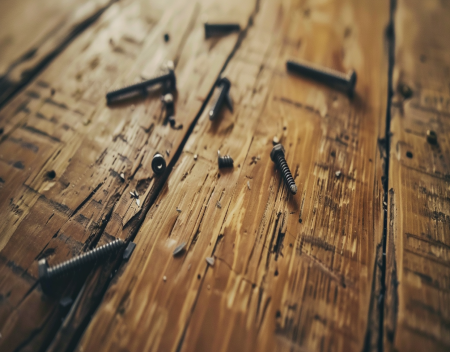
I wouldn’t be surprised if I had got my wood screw pack from AliExpress but it’s from Home Depot and I believe Everbilt is at least not a random brand.
Yet many of the screws just break if I screw them into hard wood. The worst is that the piece stays in the wood and I have no means to get it out. I am using a driver at very slow speed but it even happens if I use a screwdriver by hand.
I have used them in the past for fixing NM cable clamps to studs (from 1920 though), screwing together simple pieces of lumber, fixing lumber to studs or attaching wheels to a table. In many cases, the screws just broke. See examples on the left of the box.
What is wrong with these screws?
Question from user divB at stackexchange.
Answer:
You're trying to drive screws directly into hardwood? Or, even, really old softwood?
Doesn't matter much what screw or brand you use, you'll end up breaking them.
You need to drill a pilot hole that will remove most of the wood that the screw will encounter, leaving only enough wood for the the threads to bite into on their own. The threads are sharp and thin enough to cut through the wood themselves, but there's just too much "meat" for the body of the screw to move out of the way in hardwoods so the screw binds until you snap it.
There are a ton of questions on this site about sizing a pilot hole, but basically, the pilot hole needs to be the size of the inner part of the screw, excluding the threads.
Of note, my house was built in the 1890s. I dulled 3 cheap 1" spade bits trying to drill one single hole to run some wiring through. This old wood is tough! Most screws won't stand a chance.
Answer from user FreeMan at stackexchange.
I wouldn’t be surprised if I had got my wood screw pack from AliExpress but it’s from Home Depot and I believe Everbilt is at least not a random brand.
Yet many of the screws just break if I screw them into hard wood. The worst is that the piece stays in the wood and I have no means to get it out. I am using a driver at very slow speed but it even happens if I use a screwdriver by hand.
I have used them in the past for fixing NM cable clamps to studs (from 1920 though), screwing together simple pieces of lumber, fixing lumber to studs or attaching wheels to a table. In many cases, the screws just broke. See examples on the left of the box.
What is wrong with these screws?
Question from user divB at stackexchange.
Answer:
You're trying to drive screws directly into hardwood? Or, even, really old softwood?
Doesn't matter much what screw or brand you use, you'll end up breaking them.
You need to drill a pilot hole that will remove most of the wood that the screw will encounter, leaving only enough wood for the the threads to bite into on their own. The threads are sharp and thin enough to cut through the wood themselves, but there's just too much "meat" for the body of the screw to move out of the way in hardwoods so the screw binds until you snap it.
There are a ton of questions on this site about sizing a pilot hole, but basically, the pilot hole needs to be the size of the inner part of the screw, excluding the threads.
Of note, my house was built in the 1890s. I dulled 3 cheap 1" spade bits trying to drill one single hole to run some wiring through. This old wood is tough! Most screws won't stand a chance.
Answer from user FreeMan at stackexchange.